Cycle Recovery Deviations
How recovery signals like temperature, resting heart rate and HRV shift throughout your cycle.
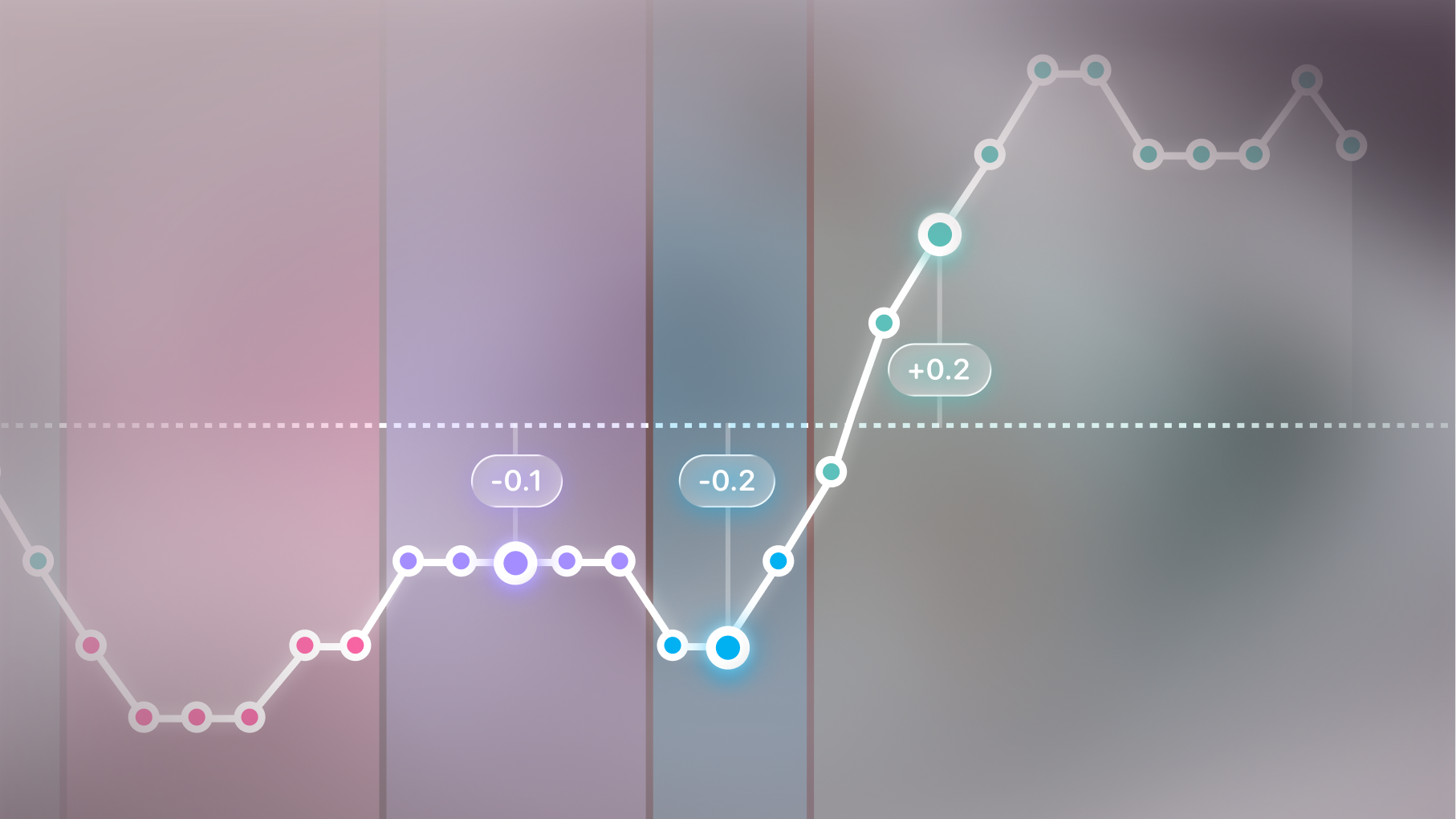
Your recovery signals, like temperature, HRV, and resting heart rate, can naturally fluctuate across your cycle. These shifts are driven by hormonal changes and reflect how your body adapts to different phases. Understanding what’s typical for you helps you spot meaningful deviations from your baseline.
Temperature Deviation
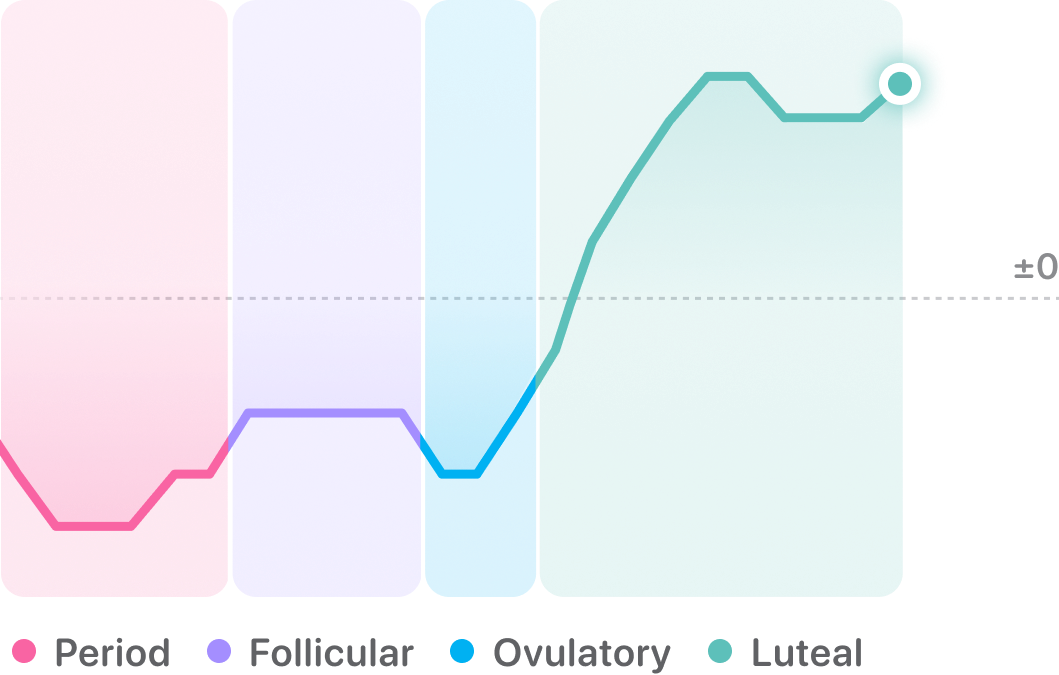
Body temperature follows a predictable rhythm across your cycle. It’s generally lower during the follicular phase and rises by about 0.3–0.5°C (0.5–1°F) after ovulation, driven by the hormone progesterone. A sustained higher temperature confirms ovulation has occurred, while a drop near the end of the luteal phase often signals your period is approaching.
Small day-to-day variations are normal. However, unexpected spikes or dips outside your usual pattern may reflect stress, illness, or disrupted sleep, rather than hormonal change.
Note: Algorithms using wrist temperature can identify ovulation in up to 90% of cycles with a clear signal - comparable in accuracy to Basal Body Temperature (BBT) tracking (Zhu et al., 2021, Milnes et al., 2022).
Heart Rate Variability (HRV) Deviation
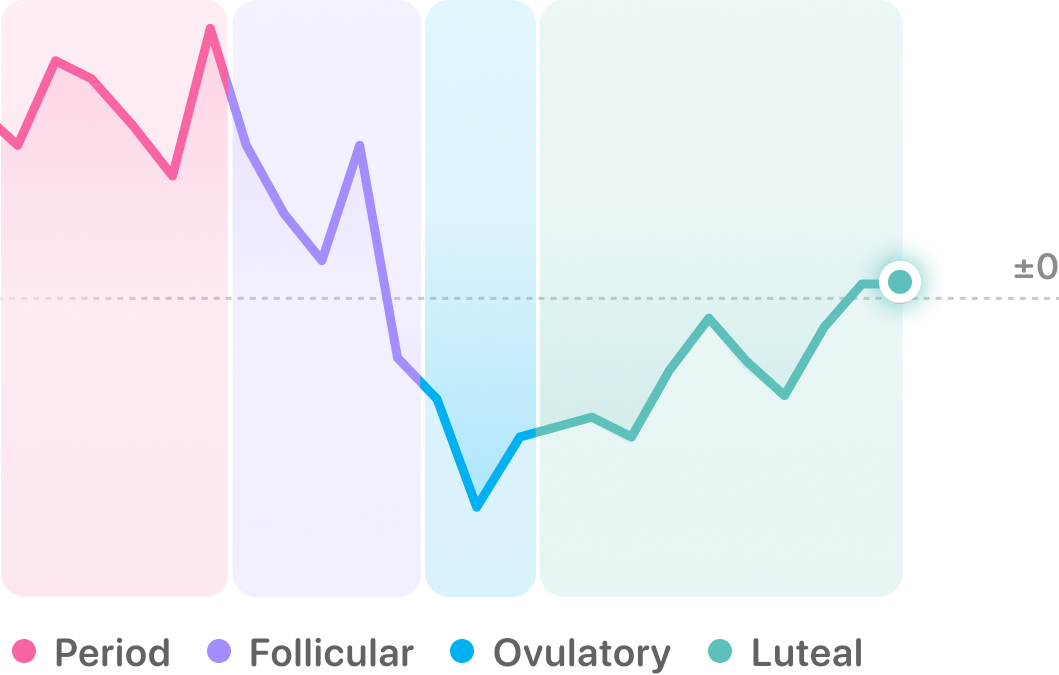
HRV, the variation in time between heartbeats, naturally fluctuates with hormonal changes. It tends to be higher during the follicular phase, when estrogen supports recovery and resilience, and lower during the luteal phase, when progesterone and body temperature rise.
These shifts are normal and reflect your body’s adaptive rhythm. However, if HRV remains consistently low outside the luteal phase, it can indicate fatigue, stress, or under-recovery.
Resting Heart Rate (RHR) Deviation
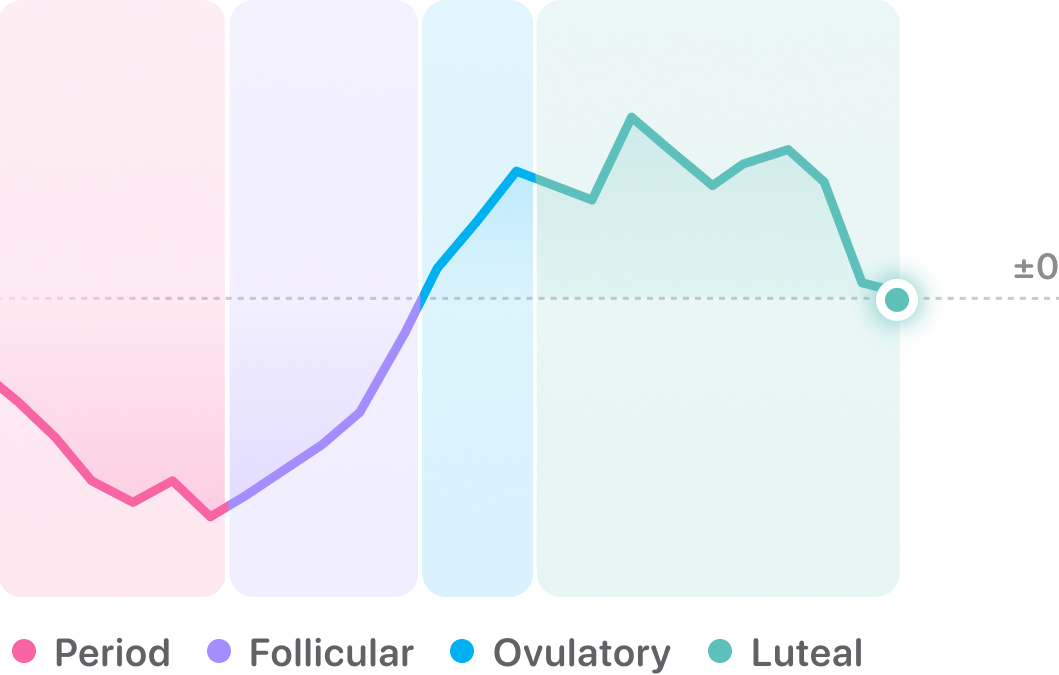
Your resting heart rate also varies across your cycle. It’s generally lower in the follicular phase and rises after ovulation, peaking mid-luteal phase as progesterone elevates metabolism and body temperature.
A cyclic rise of about 3–5 bpm is typical and reflects normal hormonal influence.
However, sudden spikes or persistently high readings may indicate factors like poor sleep, dehydration, or overtraining, rather than menstrual phase.
Recovery Score Deviation

Your Recovery Score reflects how effectively your body restores itself, integrating signals such as the ones above. The Typical Recovery range highlights where your Recovery usually falls during each part of your cycle.
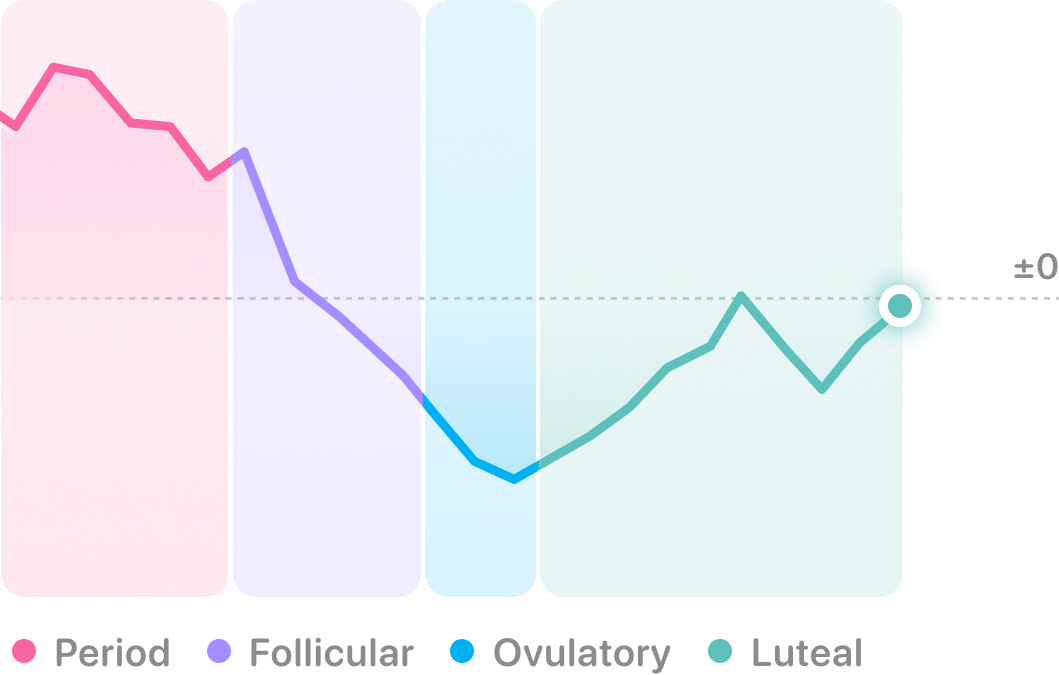
Recovery is often highest during the follicular phase, when energy and resilience peak, and naturally lower during the luteal phase, when your body benefits from extra rest and recovery. These cyclical dips are normal and part of hormonal balance, not a sign that something’s wrong.
However, consistently low recovery may point to overexertion, ongoing stress, or insufficient rest.
Why These Trends Matter
Tracking these subtle changes helps you understand your body’s natural rhythm - when you’re primed for performance, and when rest and recovery are most beneficial. By noticing patterns over time, you can make informed choices about training, rest, and self-care that align with your hormonal cycle, leading to better energy balance and long-term wellbeing.