The Basics: Muscular Load
Train with purpose by understanding your muscular load.

Muscular Load at a glance
Muscular Load compares your short-term muscular workload from the last 7 days with your long-term load over the last 6 weeks. It helps you understand whether your training is maintaining your conditioning, creating a new challenge, or increasing beyond your usual range.
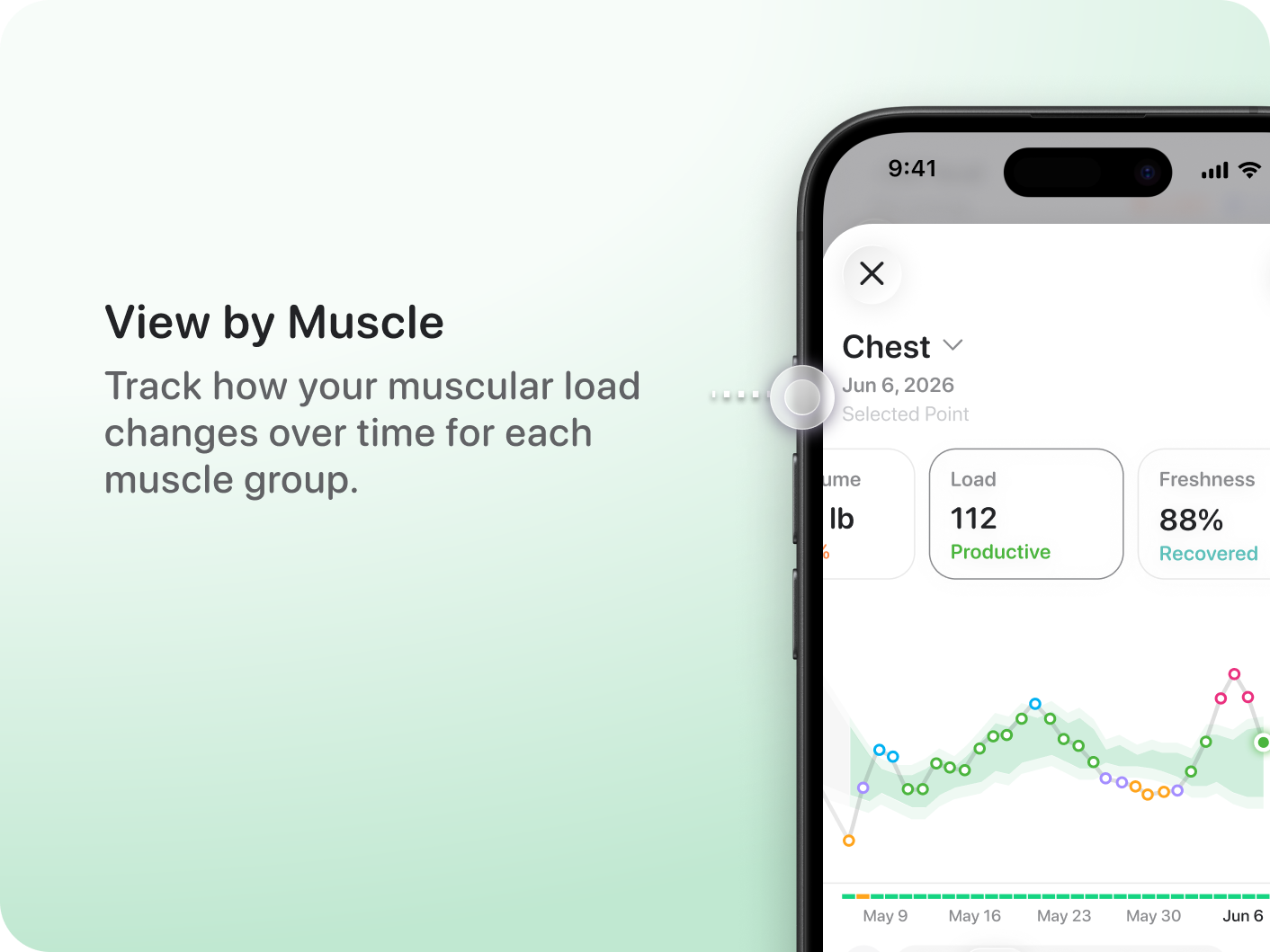
You can explore Muscular Load for your whole body, individual categories, and specific muscle groups. These views help you understand both your overall training pattern and where your workload is concentrated.
How is Muscular Load calculated?
Bevel estimates muscular effort differently depending on the activity and the workout information available:
- Strength workouts: Bevel uses your recorded exercises, sets, reps, weight, and effort to calculate muscular strain. This captures the demands of lifting even when your heart rate stays relatively low.
- Cardio workouts: For supported activities, Bevel estimates muscular load from your activity type and cardio strain. The activity provides context about muscular demands, while cardio strain helps account for the intensity of the session.
Considering effort helps put your workload into context. Research on session ratings of perceived exertion (RPE) supports using effort alongside workout duration to monitor training demands across different activities (Haddad et al., 2017).
Together, these estimates provide a view of the work your muscles are doing. Cardio Load focuses on cardiovascular demands using heart rate and workout duration, so the same workout can contribute differently to each metric.
Interpreting the chart
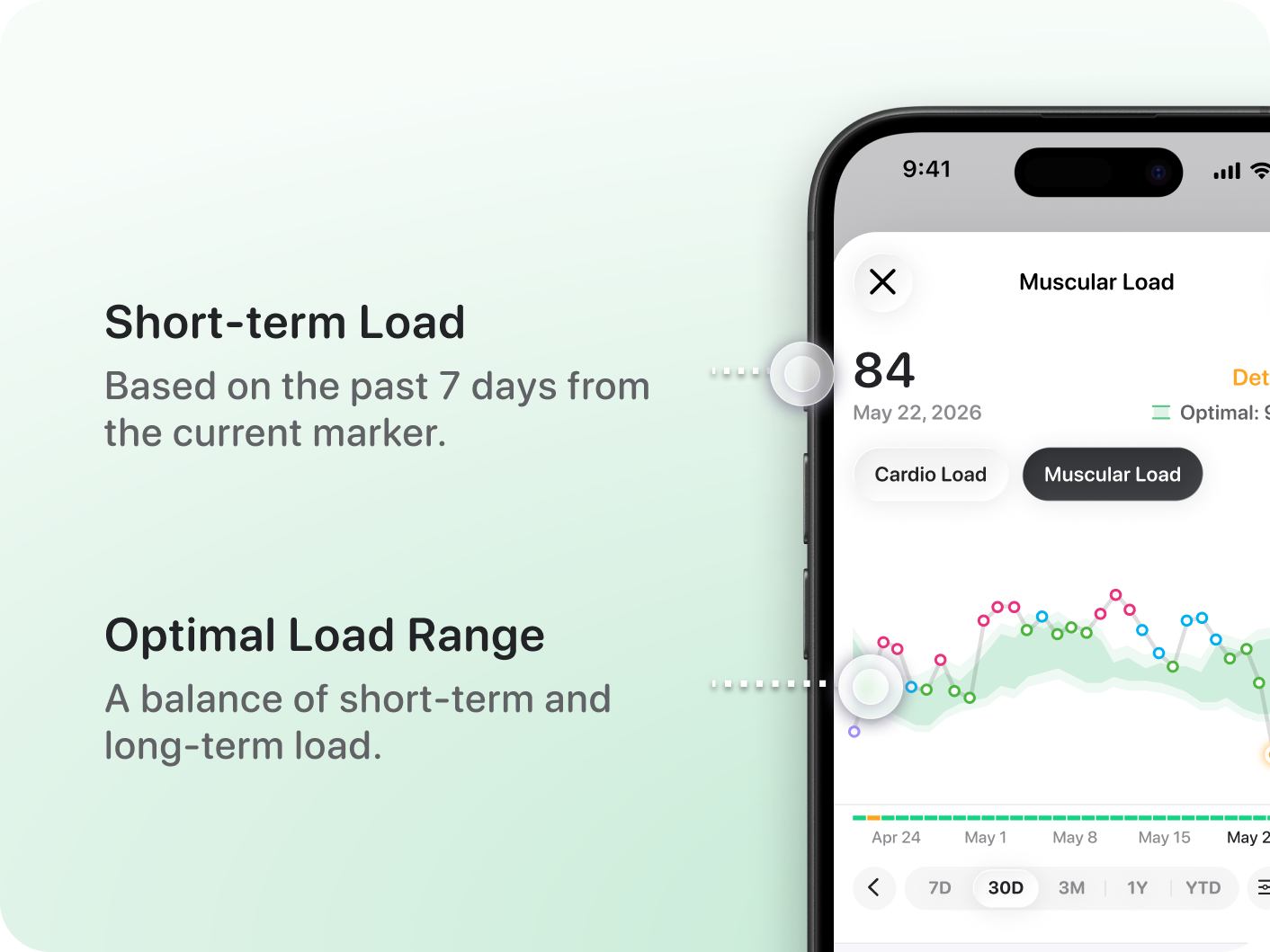
- Short-term Load: Shows your recent muscular workload and how it changes over time.
- Optimal Load Range: Provides a reference range based on your long-term workload, adjusting as your training develops.
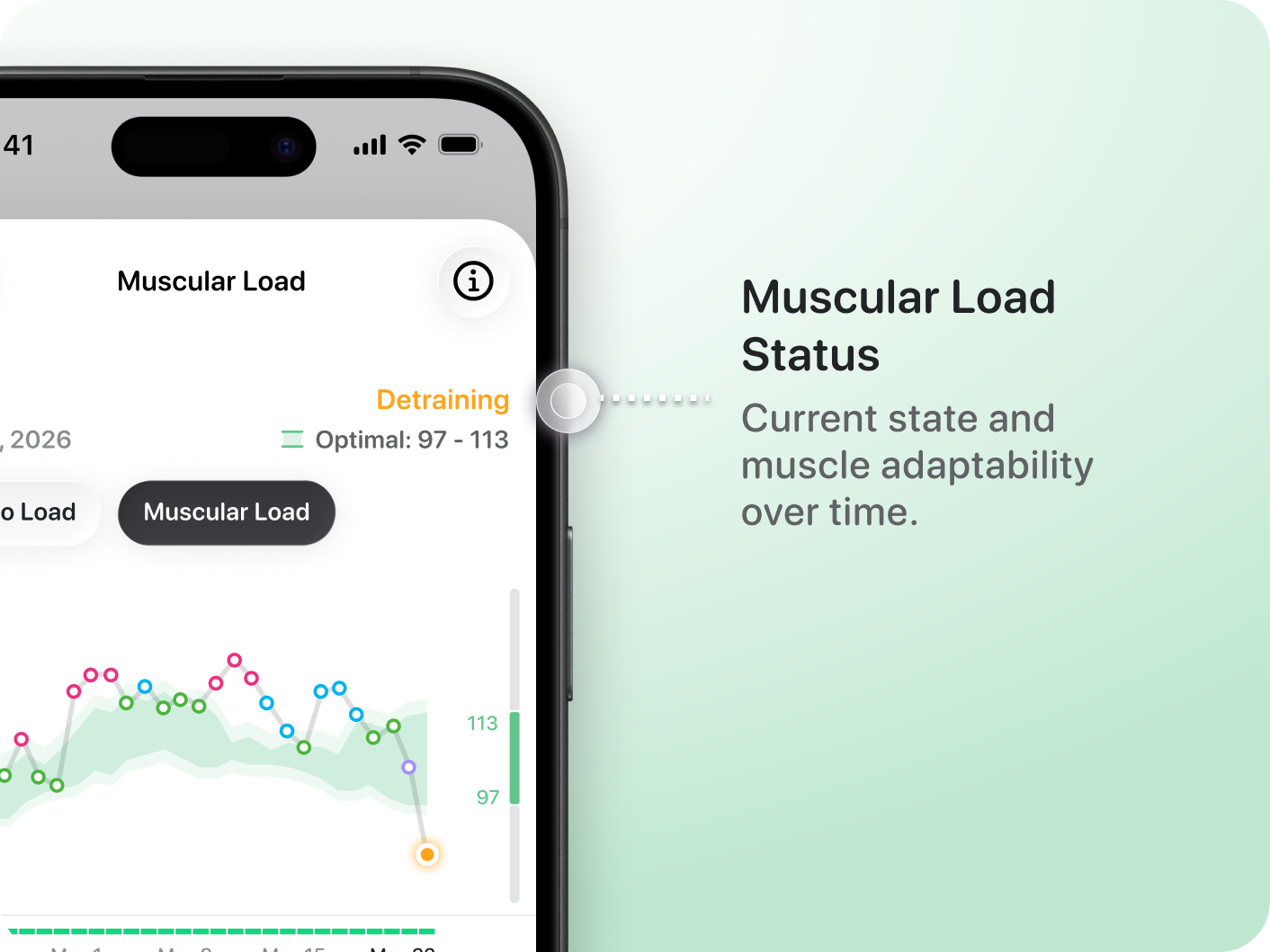
- Muscular Load Status: Summarizes how your recent workload compares with your established baseline.
Understanding your Muscular Load status
Bevel provides six statuses:
1. Detraining
Your recent muscular load is below your usual range, which may lead to reduced conditioning over time.
- What to do: Gradually return to your usual routine unless the lighter workload is intentional.
2. Maintaining
Your muscular load is supporting your current level of conditioning without adding a substantial new challenge.
- What to do: Continue if maintenance is your goal, or gradually increase your training demands to work toward further progress.
3. Productive
Your muscular load is providing enough challenge to support adaptation while allowing for recovery.
- What to do: Continue if you’re recovering well, allowing time to adjust before adding more work.
4. Peaking
Your training pattern suggests your muscles are well recovered and prepared to perform at their best.
- What to do: Consider a demanding session or event if you feel ready, using your energy and performance to guide you.
5. Overtraining
Your muscular load is significantly exceeding your muscles’ estimated ability to recover, increasing the risk of excessive fatigue.
- What to do: Reduce training volume or intensity and prioritize recovery before increasing your workload again.
6. Calibrating
Bevel is building or re-establishing your training baseline. It needs at least 10 qualifying training days in the past 6 weeks, including recent activity.
- What to do: Follow your normal routine and log consistently.
- What counts: A day with enough muscular effort. For example, five sets of biceps curls at an RPE of 5/10 would count toward Biceps, Arms, and Overall Muscular Load. A 10-minute run in Zone 2 can count toward Quads, Glutes, etc. and Overall Muscular Load.
- How calibration works: Each muscle group, category, and your overall load needs its own 10 qualifying days. Categories also need at least one calibrated muscle within them, and Overall Muscular Load needs at least one calibrated muscle anywhere in your body.
- When it finishes: Different views may finish at different times - you don’t need every muscle group calibrated to see an overall status. Training must also be recent enough, so you may see Calibrating again after an extended break.
How to use Muscular Load effectively
Look for patterns across multiple sessions, and explore individual muscle groups alongside your overall load. Use these insights together with your soreness, recovery, and workout performance to guide your training. The goal is a workload that supports your plan while leaving room to recover.