
Cycle Syncing
Explore what current research reveals about cycle syncing, and learn how to adapt your routine.
Hormone Cycles in Men vs. Women
Men and women experience fundamentally different hormonal rhythms. While both are shaped by biological cycles, the timing and effects vary significantly.
Men’s hormones follow a steady 24-hour rhythm. Testosterone peaks in the morning, fueling focus, motivation, and libido, then gradually declines by evening, leaving most men calmer and less inclined toward high-effort tasks.
Women’s hormones, by contrast, operate on a roughly 28-day rhythm (though this varies). Across this cycle, levels of estrogen, progesterone, and other hormones fluctuate, influencing energy, mood, focus, sleep, and even metabolism.
Understanding Cycle Syncing
Cycle syncing, the practice of adjusting your workouts and nutrition based on your menstrual cycle, has gained popularity and many people report noticeable changes in energy, mood, and performance throughout their cycle.
While some individual studies detect differences in certain physiological measures between phases, these effects are often modest and vary greatly between individuals. What works or feels right for one person might not for another. Hormone fluctuations can influence mood, energy, or symptoms for some, which can indirectly impact motivation and how you train or eat. However, the science shows that there’s no one-size-fits-all formula, and that you should train based on your own individual experience and symptoms.
What the Science Says
That said, understanding the research can help you notice patterns and make informed choices. Here’s what science suggests across the main phases:
Period (Menstrual Phase)

- Fitness & Strain: If energy feels low or symptoms are severe, focus on gentler movement (Romero-Moraleda et al., 2020). If you feel good, continue your usual routine.
- Recovery: Apply warm compresses or baths to relieve cramps (Zangga et al., 2023). Avoid cold exposure, which can worsen discomfort or drain energy (Scielo, 2020).
- Nutrition: Monitor iron intake to support recovery, especially if you experience heavy bleeding (Pedlar et al., 2018).
- Sleep: Focus on restorative sleep as your body recovers. (Taneja, 2018).
Follicular & Ovulatory Phases
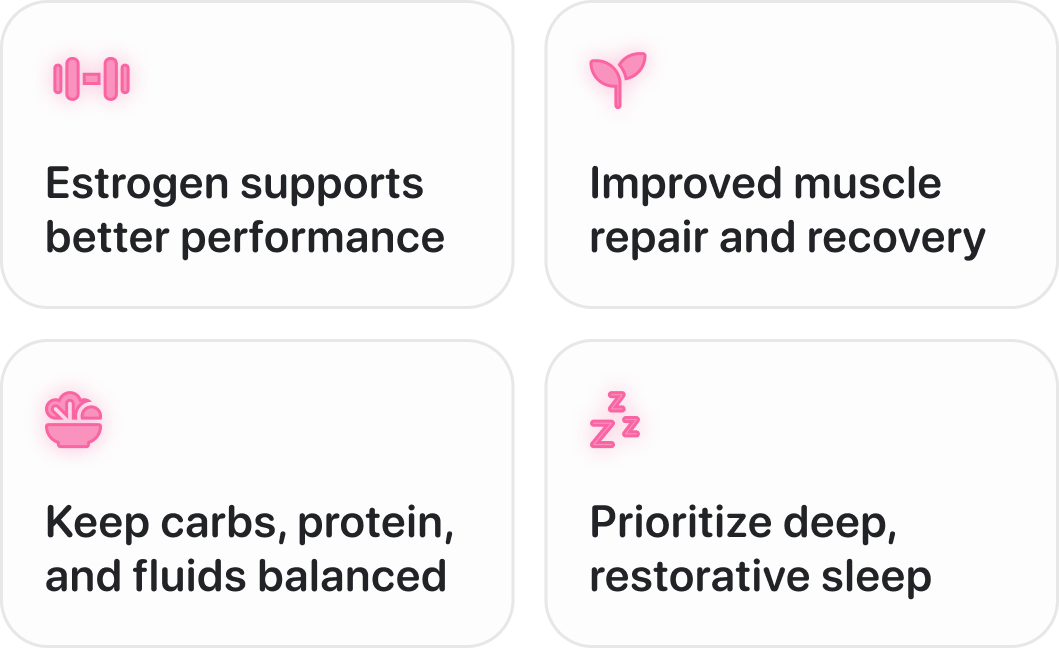
- Fitness & Strain: You may find it easier to lift heavier weights and push for personal bests. Rising estrogen supports muscle glycogen storage, recovery, and performance. (Oosthuyse & Bosch, 2010, Wikström-Frisén et al., 2017).
- Recovery: You may benefit from improved muscle repair and neuromuscular recovery with rising estrogen (Romero-Moraleda et al., 2020; Hackney et al., 2019).
- Nutrition: Your body efficiently uses carbs now, so maintain your usual balance of carbs, protein, and fluids (Oosthuyse & Bosch, 2010).
- Sleep: Take advantage of stable hormone levels and a strong immune system to focus on quality sleep. (Taneja, 2018).
Luteal Phase
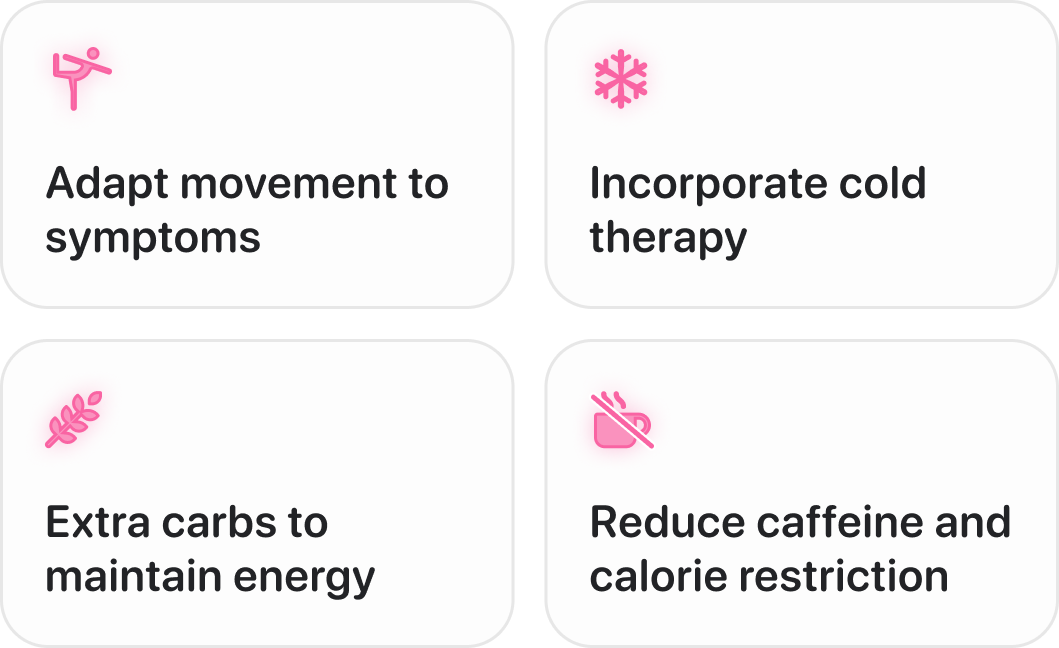
- Fitness & Strain: Expect higher heart rate, energy expenditure, and body temperature. Performance might decline at higher intensities, so you may want to focus on gentle movement, mindfulness and yoga (Oosthuyse & Bosch, 2010; Carmichael et al., 2019). If you feel good, continue your usual routine.
- Recovery: Cold-water immersion may help moderate body temp and heart rate, aiding recovery and reducing inflammation (Hausswirth & Le Meur, 2011).
- Nutrition: Progesterone may increase protein breakdown, and supporting workouts with extra carbohydrates during this phase may help maintain performance and mood (Oosthuyse & Bosch, 2010). Diets rich in vitamins B and D, zinc, calcium and omega-3 fatty acids may help prevent the onset of PMS (Oboza et al., 2024).
- Sleep: Your sleep may become lighter or disrupted, especially premenstrually. Keep your bedroom cool, reduce caffeine, and avoid calorie restriction (Rugvedh et al., 2023).
What’s the Best Approach?
- Track your own cycle and symptoms. Understanding your body and noticing when you feel more or less energetic can help you tailor your routine.
- Listen to your body’s signals, such as fatigue, hunger, or discomfort, rather than strictly following cycle-phase rules.
- Focus on overall consistency in sleep, nutrition, hydration, and training. These matter much more for your health and performance.
- If you experience irregular cycles or significant symptoms, consulting a healthcare professional is important.
The Bottom Line
Cycle syncing can be a useful tool for self-awareness, but the scientific consensus is clear: there is currently no strong evidence that timing your exercise or nutrition strictly by menstrual cycle phases improves outcomes for most people. Personalization and tuning into your own experience should guide your health and fitness journey.


