

The Basics: Muscle Freshness
Know when to push and when to give your muscles time to recover.

Muscle Freshness at a glance
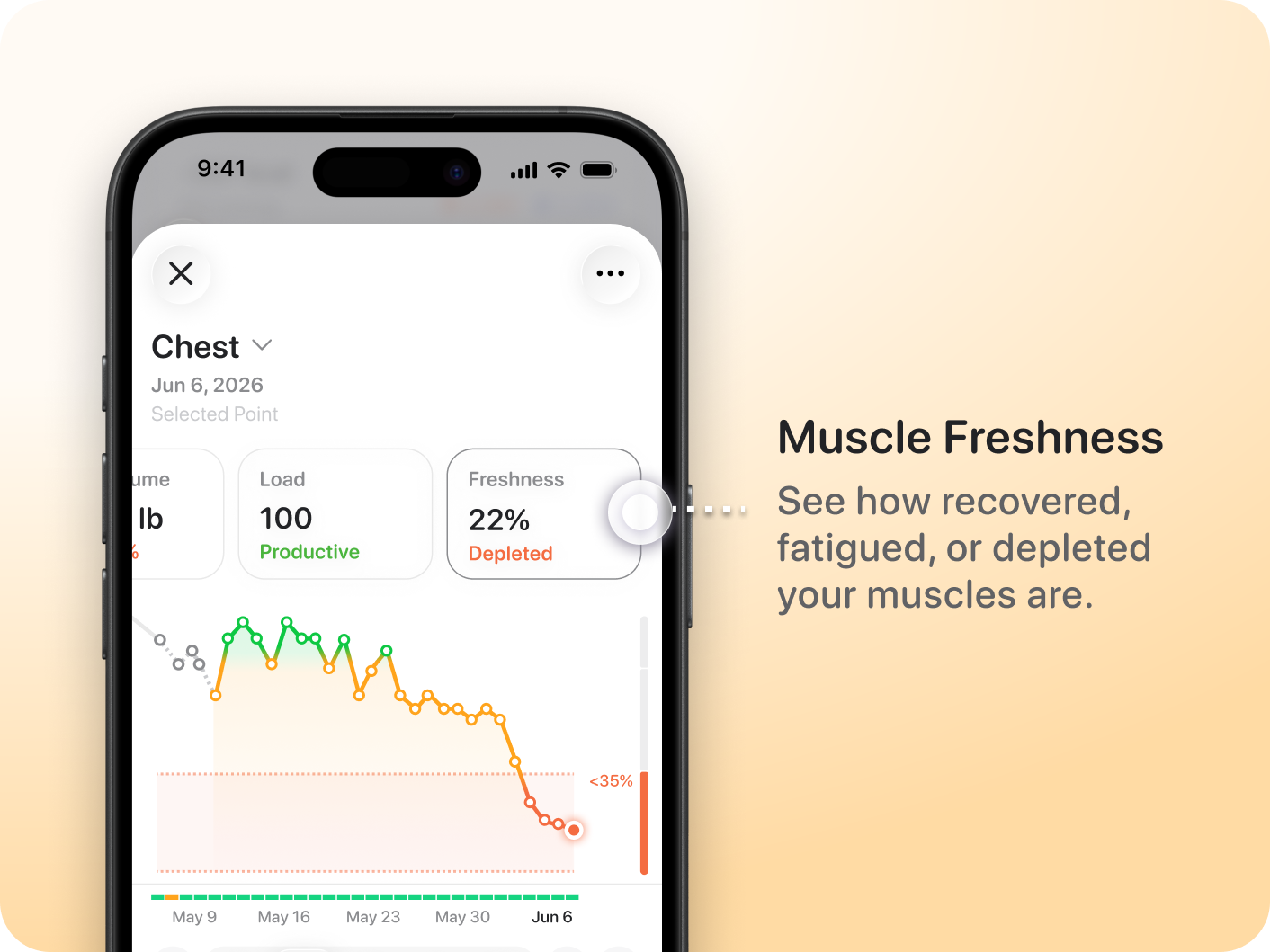
Muscle Freshness estimates how ready each muscle group is for more training, on a scale from 1–100%. A higher percentage indicates less estimated fatigue, while a lower percentage suggests more fatigue remains from recent workouts.
You can explore individual muscle groups, categories such as Legs or Arms, and your overall freshness. This helps you identify which areas may be ready for another session and which could benefit from a lighter day.
While Muscular Load puts your training workload into context, Muscle Freshness focuses on estimated readiness to train again.
How is Muscle Freshness calculated?
Bevel combines three inputs:
- Recent muscular workload: Strength workouts contribute load based on your recorded exercises and effort. Supported cardio activities contribute estimated muscular load based on activity type and Cardio Strain. Additional training adds to any fatigue that remains from earlier sessions.
- Your training history: Bevel builds a personal workload baseline for each muscle group, giving more weight to recent training. This helps put a workout’s demands into the context of what you’ve previously done.
- Recovery over time: Estimated fatigue decreases between training days using recovery rates that vary by muscle group. A more depleted muscle generally needs longer to return to a high freshness percentage.
Research supports considering both workout demands and training history. For example, training to failure has been shown to delay recovery compared with stopping short, even when total training volume was matched (Morán-Navarro et al., 2017). Research also shows that muscles can respond differently to the same exercise protocol, and that repeating a previously unfamiliar workout can reduce subsequent strength loss and soreness (Chen et al., 2019). These findings provide context for considering muscle identity and prior training, though they don’t establish Bevel’s exact recovery rates or percentages.
Understanding your Muscle Freshness status
1. Recovered — 75% and above
Estimated fatigue is relatively low, suggesting the muscle group is ready for more training.
- What to do: Consider your planned session alongside how you feel during your warm-up. Recovered doesn’t mean you need to train harder.
2. Fatigued — 35% to 75%
Some estimated fatigue remains from recent training.
- What to do: Consider a lighter session, reducing work for that muscle group, or focusing on other areas.
3. Depleted — below 35%
Estimated fatigue is high relative to your personal workload baseline.
- What to do: Give that muscle group more recovery time before another demanding session, and reassess alongside soreness and performance.
4. Calibrating
Bevel is building or re-establishing your muscle freshness baseline. Each muscle group needs at least 3 prior training days with recorded muscular load to finish calibrating.
- What to do: Log consistently and follow your normal routine.
- What counts: A day with recorded muscular load for that muscle group. Multiple workouts on the same day count as one training day.
- How calibration works: Each muscle group needs its own 3 training days. Muscle category and overall Freshness become available once at least one included muscle group is calibrated.
- When it finishes: Today’s training counts toward the baseline used on subsequent days. A muscle group returns to Calibrating if its latest recorded muscular load is more than 6 weeks old.
See your freshness at a glance
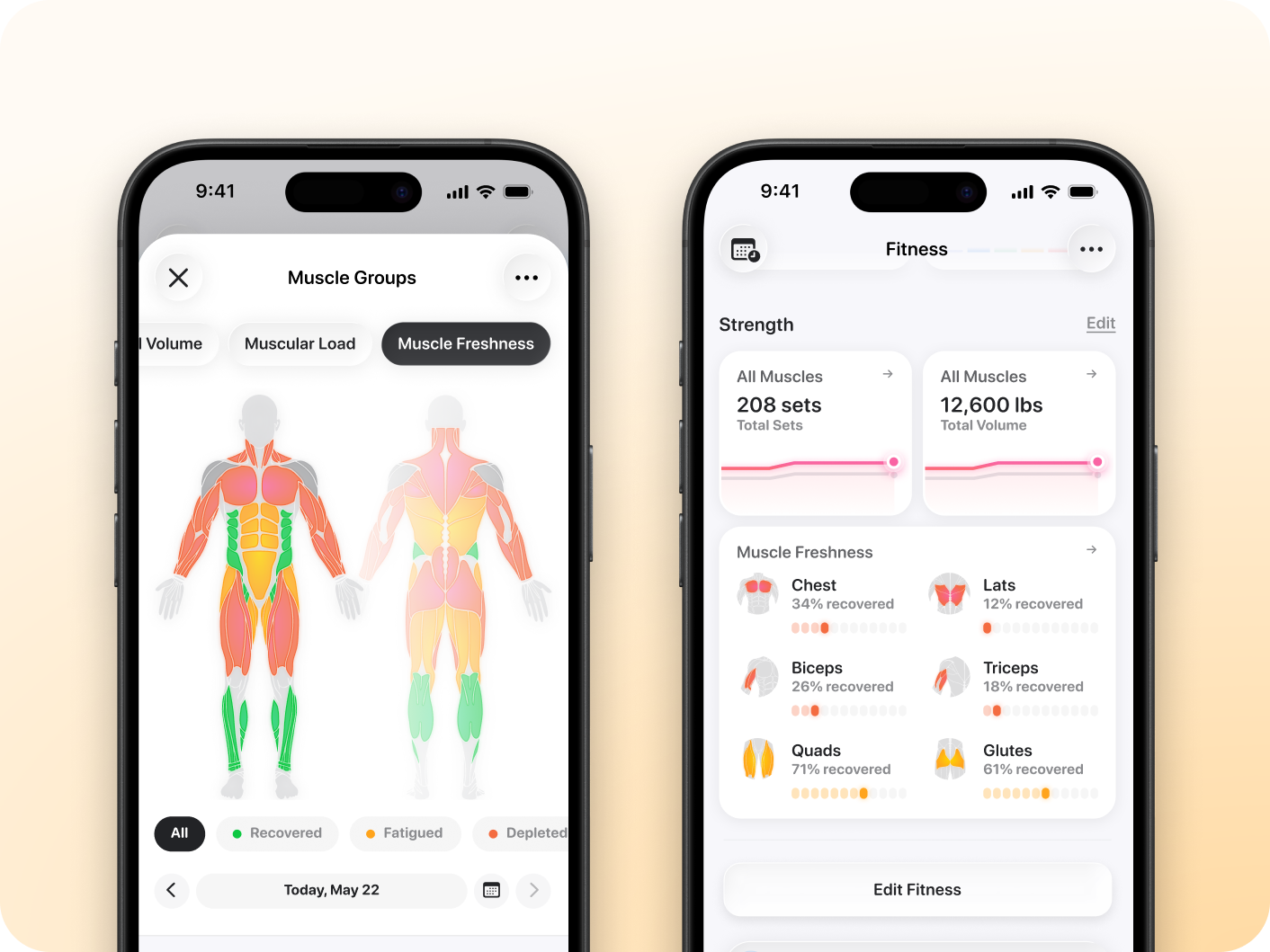
The Muscle Map brings these statuses together in one view. Each muscle group is colored by its current freshness status, helping you see which areas are recovered and which may need more time.
For example, after a run, your legs may show more fatigue while your upper body remains recovered. Use the map to check the muscles involved in your next workout, since a high overall freshness score can still include individual muscles that are fatigued.
How to use Muscle Freshness effectively
Muscle Freshness is our best estimate based on your recorded training, not a direct measurement of muscle repair. Research shows that soreness and changes in strength don’t always track together, so no single signal tells the whole recovery story (Parr et al., 2009).
Always listen to your body. If a muscle feels unusually sore, weak, or uncomfortable, adjust your session even if Bevel shows Recovered. Use freshness alongside how you feel and perform to guide your training.


